Mesothelioma
Mesothelioma is an aggressive and deadly form of cancer typically caused by exposure to asbestos fibers. The asbestos remnants lodge in the mesothelium, the membranes lining internal body parts. This leads to serious medical complications that may not appear until decades after the initial exposure occurred.

Brendan Little, Partner, Oslund Udo Little Last Updated: February 25, 2026
Home » Mesothelioma: Symptoms, Treatment, and Legal Options

- Asbestos exposure can lead to mesothelioma, a dangerous type of cancer typically affecting the lungs.
- The three main types of mesothelioma are pleural, peritoneal, and pericardial.
- Washington and Oregon have significant rates of mesothelioma due to a high number of asbestos-contaminated
- If you’ve been diagnosed with mesothelioma, Oslund Udo Little can help you seek compensation.
What Is Mesothelioma?
Mesothelioma, sometimes called malignant mesothelioma, is a type of cancer usually caused when a person inhales microscopic fibers of asbestos. These fibers become lodged in the mesothelium, the protective membrane that lines internal organs. This causes cancerous cells to build up and form masses within the mesothelium, often developing into painful and potentially deadly tumors.
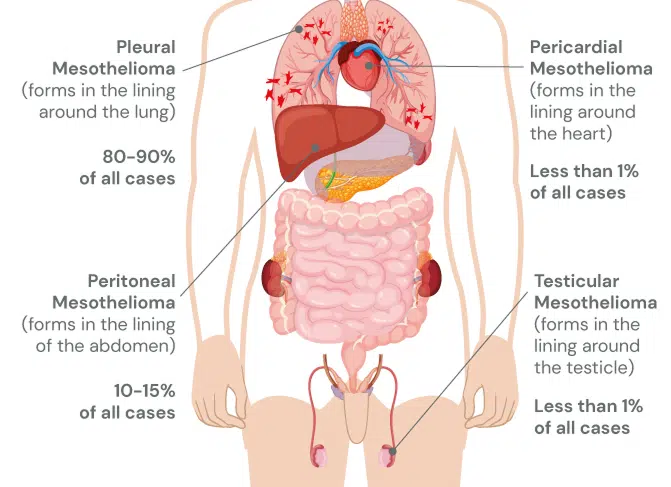
There are three primary types of mesothelioma: pleural, peritoneal, and pericardial.
Pleural mesothelioma, the most common type, impacts the pleura, the membrane covering the lungs. Peritoneal mesothelioma affects the peritoneum, which lines the abdominal wall and organs. Pericardial mesothelioma damages the pericardium, which covers the heart.
A few thousand patients are diagnosed with mesothelioma in the United States each year. The disease is very serious and often fatal, and it’s critical to pursue immediate treatment after receiving a mesothelioma diagnosis. Acting quickly can help you preserve your health and your ability to seek financial compensation.
Symptoms of Mesothelioma
Symptoms of mesothelioma vary depending on the specific diagnosis. Common symptoms for the major types of this cancer include:
| Symptoms | Pleural Mesothelioma | Peritoneal Mesothelioma | Pericardial Mesothelioma |
| Shortness of breath | ✓ | ✓ | ✓ |
| Chest pain | ✓ | ✓ | |
| Mass on the chest wall or surface of the chest | ✓ | ||
| Abdominal/belly pain | ✓ | ||
| Irregular heartbeat or murmur | ✓ | ||
| Face and arm swelling | ✓ | ||
| Abdominal swelling | ✓ | ||
| Difficulty swallowing (dysphagia) | ✓ | ||
| Nausea and vomiting | ✓ | ||
| Diarrhea or constipation | ✓ | ||
| Red blood cell or blood pressure abnormalities | ✓ | ✓ | |
| Blood clots | ✓ | ✓ | ✓ |
| Fatigue | ✓ | ✓ | ✓ |
| Sudden weight loss | ✓ | ✓ | ✓ |
| Loss of appetite | ✓ | ||
| Chronic cough | ✓ |
Many symptoms of mesothelioma can be misdiagnosed due to their frequent occurrences in other conditions. Fever, cough, sudden weight loss, fatigue, night sweats, and malaise can all be attributed to more common disorders.
Mesothelioma also has a latency period that can be decades long, meaning the disease may not appear for many years after the asbestos exposure occurred. Early treatment is critical to protect your health.
If you have a history of asbestos exposure and begin experiencing potential symptoms of mesothelioma, talk to your doctor immediately about getting tested.
Types of Mesothelioma
Mesothelioma impacts patients differently depending on the body parts the disease affects.
Pleural Mesothelioma
Pleural mesothelioma is the most common type of the disease, accounting for roughly 85% of all cases. Buildup of asbestos fibers in the pleura lining the lungs leads to the development of cancerous masses and makes breathing difficult and painful. Pleural mesothelioma often results in complications like pleural effusion, pleural plaques, and asbestosis.
Pleural effusion is a collection of excess fluid between the layers of the pleura around the lungs. This often causes chest pain and difficulty breathing. Up to 95% of people with pleural mesothelioma experience effusion as their disease progresses.
Pleural plaques and asbestosis are two forms of lung scarring. Plaques are generally non-symptomatic, but asbestosis can contribute to breathing problems.
Peritoneal Mesothelioma
Peritoneal mesothelioma makes up 10% to 20% of all mesothelioma diagnoses every year. It affects the peritoneum, which covers the abdominal wall and organs.
This type of mesothelioma is characterized by pain and swelling in the abdomen, particularly in the form of fluid buildup, painful masses in the pelvis, and digestive problems such as diarrhea, constipation, and vomiting. Loss of appetite and sudden weight loss are common, as the pain and potential blockages caused by the cancer can make it difficult for patients to eat.
Pericardial Mesothelioma
Pericardial mesothelioma is an extremely rare form of cancer that affects the membrane surrounding the heart. Some scientists estimate that only 200 cases of pericardial mesothelioma have ever been recorded.
The condition is distinguished from other forms of mesothelioma by its impact on the heart. People with this form of cancer may experience irregular heart rhythm, heart murmurs, and low blood pressure.
While there is no cure for mesothelioma, life expectancy and health outcomes may be improved through earlier diagnosis and treatment. If you’ve been diagnosed with any form of mesothelioma, consult an experienced attorney to seek legal assistance and advice.
Causes and Risk Factors for Mesothelioma in the Pacific Northwest
Asbestos exposure is the only confirmed cause of mesothelioma. Roughly 70% to 80% of patients report a history of asbestos exposure.
Gender and age are also risk factors. The majority of mesothelioma patients are male, although women are also impacted by the disease. Most patients are 65 or older, and the condition is rare in people under 45.

Individuals are exposed to asbestos when asbestos materials are friable and that material is disturbed in a way that releases the asbestos fibers into the air, which happens in many different settings, like shipyards and industrial sites. It can also happen through certain consumer products, and when those fibers, which are invisible, are released into the air, the individual, without their knowledge, breathes them in and they become lodged in the lungs and can cause asbestos-related diseases.
– Brendan Little, Partner at OUL
Often, asbestos-related diseases take many decades to develop. In mesothelioma, the amount of time that the disease takes to develop is often 20 years or more from when the exposure occurred. For that reason, many of our clients were exposed to asbestos in the ’60s or ’70s or even earlier and did not develop mesothelioma until 20, 30, 40, or sometimes 50 years after that exposure occurred.
– Brendan Little, Partner at OUL
Residents of the Pacific Northwest face heightened risks of asbestos exposure and mesothelioma. Occupations with high levels of asbestos contact, such as shipyard work, construction, oil refining, and paper milling, are common in the region. Veterans have also been exposed to mesothelioma on military bases in Oregon and Washington. These factors mean residents in these states are more likely overall to interact with products manufactured with asbestos or suffer secondary exposure by handling clothes and other belongings contaminated with asbestos.
There is no “safe” level of asbestos exposure. Even low-level exposure can place you at risk of developing mesothelioma.
Mesothelioma in Washington
There are many known contamination sites and common causes of mesothelioma in Washington. The state’s long history of manufacturing, oil drilling, shipbuilding, and other major industries exposed many workers to asbestos, which later led to mesothelioma diagnoses.
Known contamination sites in the state include Seattle, Bellingham, Spokane, and Tacoma. Companies such as Weyerhaeuser, shipyards such as the Puget Sound Naval Shipyard in Bremerton, and power plants such as the Hanford Nuclear Site in Benton County all exposed workers to asbestos over the course of their operation. Waterways such as Swift Creek and the Sumas River in Whatcom County are monitored by the EPA for asbestos runoff from talc quarries.
If you’ve been exposed to asbestos in Washington, a reliable Washington mesothelioma attorney may help.
Video Transcript
Historically, Washington has been an area with significant shipbuilding activity, both in building ships and in maintaining them. Asbestos insulation was used throughout these ships to insulate pipes, turbines, and other equipment. In the Pacific Northwest, the robust timber products industry’s mills were primarily powered by steam and historically used large amounts of asbestos-containing insulation, whether on the boilers or turbines. Workers in these industries were often exposed to high levels of asbestos.
All of the pulp and paper mills throughout Washington have also been sources of asbestos exposure, and we have had clients who were exposed there and later developed mesothelioma. Oslund Udo Little has been representing victims of asbestos exposure in the Pacific Northwest for over 30 years. We make the process as easy as possible for you, so you can concentrate on what’s most important. Please give us a call.
Mesothelioma in Oregon
Asbestos exposure is also common in Oregon due to contamination at the state’s shipyards, manufacturing sites, timber and paper processing plants, and military bases, among other sites.
Known hotspots for asbestos include Portland, Eugene, Salem, and Tigard, among many others. Companies such as Zidell Ship Dismantling and Crown Zellerbach Paper, military bases including Umatilla Army Depot and Portland Air Force Base, and major oil refineries such as Texaco and Chevron have all been sites of exposure for workers in the state and on its shores over the years.
If you’ve been diagnosed with mesothelioma in Oregon, contact a knowledgeable Oregon mesothelioma attorney for assistance and advice.
Video Transcript
At Oslund Udo Little, we have helped families secure over a billion dollars in recoveries for asbestos disease claims, and we can help you and your family get the recovery you deserve.
How Mesothelioma Is Diagnosed
Common diagnostic methods used to test for mesothelioma include:
- Imaging tests like MRIs, CT scans, X-rays, and PET scans
- Biopsy procedures
- Analysis of pleural or abdominal fluid
- Lung function testing
- Blood tests
Mesothelioma progression has three stages related to the location of the cancer and the possibility of removal:
- Localized and resectable, or removable by doctors
- Localized and not resectable
- Metastasized, meaning the cancer has spread to other parts of the body and is not resectable
Early diagnosis is key to improving survival rates and efficacy of treatment. If you suspect you may have mesothelioma, talk to your doctor about diagnostic testing.

Treatment Options for Mesothelioma
Treatments for mesothelioma generally focus on extending the patient’s life and improving the quality of life as much as possible. Standard treatment options include surgery, chemotherapy, radiation therapy, and immunotherapy.
Newer treatments include targeted drug therapies in clinical trials, tumor treating fields, and immunotherapy. Some doctors and treatment centers specialize specifically in mesothelioma care. Your doctor will determine the most effective therapy for you depending on your unique medical circumstances, particularly the type of mesothelioma you have and its stage of progression.
Mesothelioma treatment can be expensive, leaving patients dealing with major medical bills. In rare cases, patients may also suffer due to medical malpractice, leading to lawsuits for the additional injuries suffered and costs incurred. A diligent mesothelioma attorney can help you fight for compensation for costly medical treatment or potential malpractice.
Mesothelioma Prognosis and Survival Rates
Mesothelioma is an aggressive cancer with a high fatality rate. Prognoses for patients vary depending on the type of mesothelioma, the stage of cancer at diagnosis, and other potentially complicating factors such as age and general health.
Survival rates for mesothelioma are generally assessed on a five-year timeline. These statistics measure how likely a person is to survive for five years after diagnosis. Five-year survival rates vary depending on the type of disease:
- Pleural mesothelioma has a five-year survival rate of 12%, meaning only 12% of patients survive for five years after diagnosis.
- Peritoneal mesothelioma generally has a more positive prognosis, with a five-year survival rate of 65%.
- Pericardial mesothelioma has a five-year survival rate of 9%.

Average life expectancy after diagnosis depends on the type of mesothelioma and whether a patient seeks treatment:
- Pleural mesothelioma: One to four years with treatment, six months without
- Peritoneal mesothelioma: Two to six years with treatment, six months to one year without
- Pericardial mesothelioma: Average life expectancy of roughly two to six months, with many patients only diagnosed posthumously

Legal Rights for Mesothelioma Victims
If you’ve been diagnosed with mesothelioma or lost a loved one to asbestos-related disease, you have options to fight for compensation.
You may file a mesothelioma lawsuit against the party responsible for your illness. Taking this route means you can pursue restitution for both economic damages—like medical bills, loss of income, and other financial costs — and non-economic damages, like pain and suffering or loss of enjoyment of life.
If your loved one died due to asbestos-related illness, you can file a wrongful death suit to seek compensation. Immediate family members like spouses and children may be eligible to recover economic damages, such as funeral costs, and non-economic damages, like grief.
In some cases, mesothelioma victims can file asbestos trust fund claims. Companies establish these funds when they have exposed a large class of people, such as customers or employees, to asbestos in the same way. If you were harmed by a company with an established trust fund, you may be eligible to file a claim.


There are a few different sources of potential compensation for mesothelioma victims. One of those is compensation from trust funds that have been set up by bankrupt asbestos companies, but the lion’s share of compensation in most cases is going to come from litigation through a lawsuit. You really need to consult with an experienced mesothelioma lawyer about which type of compensation is best for you because there’s not a one-size-fits-all approach when it comes to mesothelioma cases, which are very dependent on the different facts of your particular case.
– Vanessa Firnhaber Oslund,
Partner at OUL
Mesothelioma Settlements and Verdicts
Our attorneys have secured over $1 billion in settlements and verdicts for mesothelioma victims. Some of our most notable results include:
- $30 million for the family of a 67-year-old man who died of mesothelioma
- $11.2 million for a former employee of Zidell Dismantling in Tacoma diagnosed at 75
- $10 million for a man who died after World War II-era asbestos exposure
- $8.3 million for a former employee of Puget Sound Naval Shipyard in Bremerton diagnosed at 79
You can learn more from our client testimonials about why to choose our firm.
If you have a mesothelioma diagnosis you believe was due to asbestos exposure, you deserve compassionate representation. Contact Oslund Udo Little for a free consultation.
Video Transcript
There are a few different sources of potential compensation for mesothelioma victims. One of those is compensation from trust funds that have been set up by bankrupt asbestos companies, but the lions share of compensation most cases is going to come from litigation through a lawsuit. Now you really need to consult with an experienced mesothelioma lawyer about which type of compensation is best for you, because there’s not a one size fits all approach when it comes to mesothelioma cases. It’s very dependent on the different facts of your particular case.
Oslund Udo Little has been representing victims of asbestos exposure and the Pacific Northwest for over 30 years. We make the process as easy as possible for you that you can concentrate on what’s important, please give us a call.
Mesothelioma in Veterans
Regular exposure to asbestos in the military is a common cause of mesothelioma in veterans, which can have disabling and deadly results.
Asbestos was commonly used throughout the 20th century in ship parts, plane insulation, base housing installations, electrical components, and other materials surrounding military service members daily, leading to high exposure rates. Veterans who served in the military before 1980 are particularly at risk.
If you’re a veteran who developed mesothelioma as a result of your military service, you can pursue veterans’ benefits with the VA. These benefits include VA health care at free or reduced cost, benefits for dependents, and, in some cases, monthly disability compensation.
A very high percentage of our mesothelioma clients are Navy veterans, and the reason for that is because Navy vessels contained a large amount of asbestos insulation throughout the vessels. Historically, machinery and equipment were all coated in asbestos-containing insulation—it was in the gaskets and packing various pieces of machinery on the Navy ships.
– Vanessa Firnhaber Oslund,
Partner at OUL
Frequently Asked Questions About Mesothelioma
What are the early symptoms of mesothelioma?
Early symptoms of mesothelioma include chest pain and shortness of breath. Coughing, trouble swallowing, and swelling of the face, arms, or abdomen are also common manifestations of early mesothelioma. If you experience these symptoms and believe you could have been exposed to asbestos, talk to a medical professional right away.
How long after asbestos exposure does mesothelioma develop?
Mesothelioma often takes decades to develop after initial asbestos exposure. The period between exposure and onset of illness is known as the “latency period.” The Mayo Clinic estimates that the latency period for mesothelioma can last anywhere from 15 to 40 years.
Can mesothelioma be cured?
In most cases, mesothelioma is not curable. However, cancer treatments can extend the life of the patient or minimize more severe symptoms.
Early-stage mesothelioma can be treated with surgery, chemotherapy, and other options to try to eliminate the cancer as much as possible. Talk to your doctor about appropriate treatment options for your unique circumstances.
How much asbestos exposure causes mesothelioma?
While greater levels of asbestos exposure are linked to higher occurrences of mesothelioma, there is no such thing as a “safe level” of exposure. Breathing in any amount of asbestos fibers places you at risk of developing mesothelioma and related conditions later in life.
What should I do if I think I've been exposed to asbestos?
If you think you’ve been exposed to asbestos, it’s critical to talk to a doctor immediately about your options. If you receive a diagnosis of mesothelioma or another asbestos-related condition caused by someone else’s negligence, reaching out to an experienced mesothelioma attorney as soon as possible can help you preserve your right to fight for compensation.