
Asbestos Exposure: Updated March 2026
Asbestos exposure is known to cause serious illnesses, including mesothelioma, lung cancer, and asbestosis. Throughout much of the 20th century, asbestos was widely used in shipyards, power plants, paper mills, refineries, military installations, and industrial facilities across Washington and Oregon.
As a result, many Pacific Northwest workers and their families are still facing the consequences decades later. At Oslund Udo Little, we understand the life-altering impact an asbestos-related diagnosis can have on individuals and families. Since 1995, our firm has focused on asbestos and mesothelioma litigation. We approach every case with careful investigation, deep knowledge of Pacific Northwest job sites, and a commitment to holding responsible companies accountable.

NAVIGATE THIS PAGE
- Asbestos was a common component of countless products and industrial materials because of its heat and fire-resistant properties.
- Workers and consumers exposed to asbestos are at risk of developing mesothelioma, lung cancer, and other severe diseases.
- Victims and surviving family members may be entitled to pursue legal action against companies responsible for asbestos exposure.
What Is Asbestos Exposure?
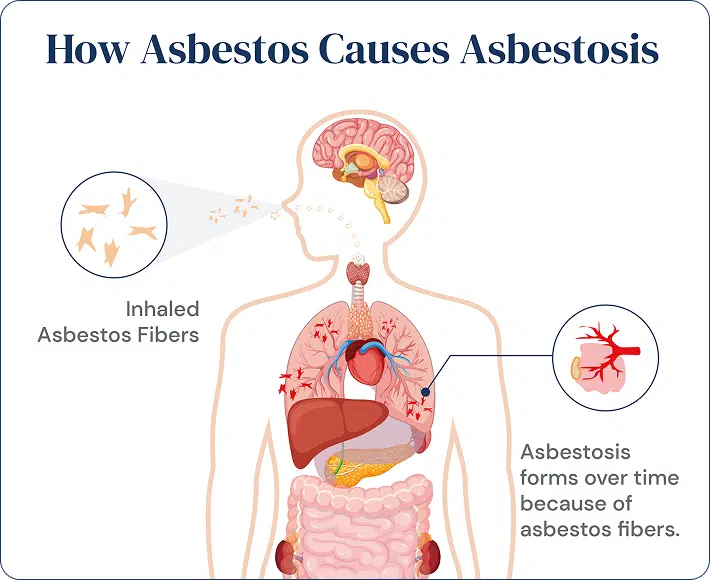
Asbestos exposure occurs when microscopic asbestos fibers become airborne and are inhaled or ingested.
Asbestos is a naturally occurring mineral that was widely used for its heat resistance and strength. When asbestos-containing materials break down or are disturbed, they can release fibers that are small enough to become embedded in the lining of bodily organs, such as the lungs or abdomen, where they remain for years. The body cannot eliminate them, leading to harmful inflammation and serious diseases such as mesothelioma, lung cancer, and asbestosis.
How Does Asbestos Exposure Happen?
Asbestos exposure typically occurs during work, renovation, or maintenance activities that disturb asbestos-containing materials.
Cutting insulation, demolishing older structures, repairing industrial equipment, or working around aging materials can release fibers into the air. Exposure was common in industrial settings and military settings where asbestos was routinely used. In some cases, fibers were unknowingly carried home on clothing or skin, leading to secondary exposure among family members.

Individuals are exposed to asbestos when asbestos materials are friable and that material is disturbed in a way that releases the asbestos fibers into the air, which happens in many different settings like shipyards and industrial sites. It can also happen through certain consumer products, and when those fibers, which are invisible, are released into the air, the individual, without their knowledge, breathes those in and they become lodged in the lungs and can cause asbestos-related diseases.
– Brendan Little, OUL Partner
What Is Secondhand Asbestos Exposure?
Secondhand asbestos exposure, also called secondary exposure, occurs when asbestos fibers are carried home on a worker’s clothing, shoes, hair, or skin and inhaled by family members. These asbestos fibers can cause chronic contamination in the home and are often released during laundering activities.
Because the fibers are microscopic and easily transferred, spouses and children have developed mesothelioma decades after indirect exposure inside their own homes, often without ever directly handling asbestos themselves.

Secondary or household exposure to asbestos typically occurs when Dad comes home from work still wearing his work shirt or coveralls. He walks in the door, gives his wife a hug and a kiss, plops down on the couch, and the kids come crawling over, ready to hug him.
“Unfortunately, that’s the kind of situation where invisible asbestos fibers can transfer to the children or the wife, and they breathe them in. Thirty, forty, or even fifty years later, the wife or one of the kids might develop mesothelioma.
– Vanessa Firnhaber Oslund, OUL Partner
Asbestos Exposure Risks in the Workplace, Military, and Everyday Products
Those most at risk of asbestos exposure are individuals who worked in high-exposure industries, served in the military, served on Navy ships or lived in environments where asbestos-containing materials were commonly used. Understanding who was most affected helps explain why certain industries, job sites, and regions saw higher rates of asbestos-related disease.
Occupational Asbestos Exposure
Occupational asbestos exposure occurs when asbestos fibers are inhaled or ingested while performing job duties, particularly in environments where asbestos-containing materials are regularly installed, repaired, removed, or disturbed. Before safety regulations were strengthened, many workers handled these materials daily without adequate warnings or protective equipment.
High-risk occupations include the following:
Industrial Asbestos Exposure On Jobsites in The Pacific Northwest
For decades, internal corporate documents revealed that many manufacturers were aware of the health risks posed by asbestos. Despite that knowledge, asbestos-containing materials continued to be used at sites throughout Washington and Oregon.
Washington:
Oregon:
- Swan Island Shipyard
- Zidell Marine Corporation
- Boise Cascade Paper Mill
- Georgia-Pacific Paper Mill
- Portland General Electric
- Trojan Nuclear Power Plan
- BP (formerly ARCO) Refinery in Portland
- Rhone-Poulenc Chemicals
- Oregon Steel Mills
- Umatilla Army Depot
- Union Pacific Railroad
- Southern Pacific Railroad
- Willamette Iron and Steel Works
What Products Contained Asbestos?
Asbestos was incorporated into thousands of products throughout the 20th century because of its heat resistance and durability. Residential and commercial building materials, including insulation, floor tiles, joint compound, ceiling textures, roofing products, and HVAC components, often contained it.
Asbestos was also widely used in automotive parts, including brake pads, clutches, and gaskets, as well as in cement siding, fireproofing materials, and industrial equipment designed to withstand high temperatures.
Some consumer goods have also been linked to asbestos contamination. Certain talc-based cosmetics and baby powder products have tested positive for containing asbestos, and older appliances and protective gear sometimes contained asbestos components.

How Can I Protect Myself from Asbestos Exposure?
You can reduce your risk of asbestos exposure by avoiding disturbance of materials that may contain asbestos. According to the U.S. Environmental Protection Agency’s latest guidance, asbestos that remains intact and undisturbed generally does not present a health risk. The danger arises when asbestos-containing materials are handled, damaged, deteriorate, or are otherwise disturbed, allowing microscopic fibers to become airborne and inhaled.
As a general safety practice, individuals working in regulated environments should follow all workplace safety requirements, use appropriate protective equipment, and rely on trained professionals when inspecting, repairing, or removing asbestos-containing materials.
The Alan Reinstein Ban Asbestos Now Act of 2025
The Alan Reinstein Ban Asbestos Now Act of 2025 is federal legislation that would prohibit the manufacture, processing, importation, and distribution of asbestos in the United States. The bill, which is still pending action by Congress, would apply to all recognized forms of asbestos fiber and is intended to expand existing regulatory restrictions by addressing remaining permitted uses under federal law.
Why Is Asbestos Exposure So Dangerous?
Asbestos exposure is dangerous because once microscopic fibers enter the body, they can remain embedded in tissue for decades, causing ongoing irritation and irreversible cellular damage.
The Agency for Toxic Substances and Disease Registry links asbestos exposure to mesothelioma and asbestos-related lung cancer. When inhaled, fibers can lodge in the delicate lining of the lungs and airways, triggering chronic inflammation and scarring that may eventually contribute to tumor development.
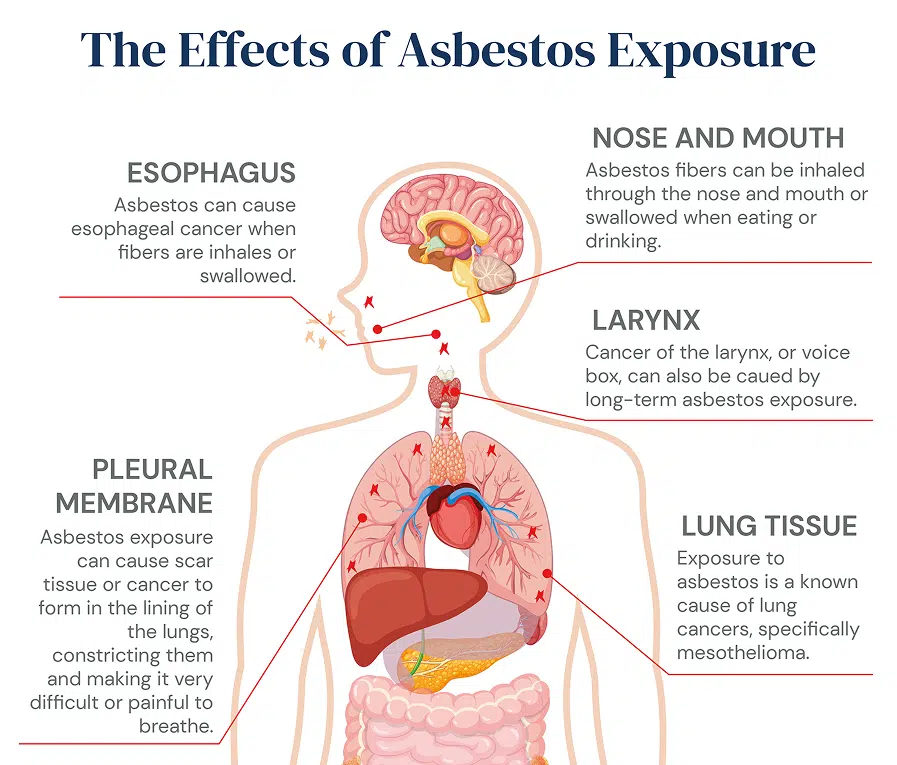
The National Cancer Institute recognizes that all types of asbestos pose health risks. However, amphibole forms of asbestos may pose a greater risk of mesothelioma because they remain in the lungs for longer periods.
Asbestos-related diseases have long latency periods. People who inhale or ingest asbestos fibers often do not show signs of disease for decades. During that time, asbestos fibers can cause irreversible damage to the body, eventually resulting in a life-threatening, untreatable cancer.
Sometimes, people develop non-cancerous conditions such as asbestosis and pleural disease. Asbestosis involves inflammation and scarring of the lungs, which causes shortness of breath. These asbestos-related diseases typically get progressively worse, even with medications and treatment to manage symptoms.
Symptoms of Asbestos Exposure
Affected individuals may not begin to show asbestos exposure symptoms for up to 60 years. A longer latency period is more common among people with less exposure. Higher levels of asbestos exposure may lead to symptoms developing sooner.
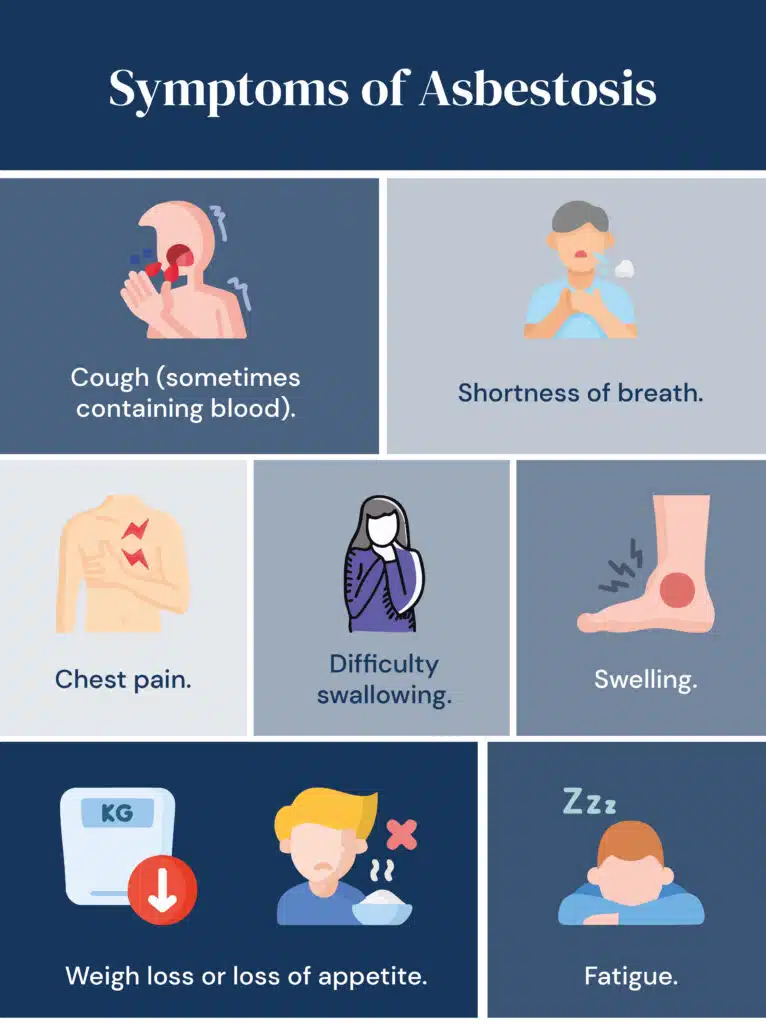
Early signs of mesothelioma and other asbestos-related diseases include a persistent cough, wheezing, and vocal hoarseness.
As the illness progresses, symptoms may include chest pain, difficulty swallowing, and facial or neck swelling. Victims may not feel hungry, and their weight may drop substantially. Some people feel constantly tired, no matter how much sleep they get.
There Is No Safe Level of Asbestos Exposure
According to the Occupational Safety and Health Administration, there is no “safe” level of asbestos exposure. People have developed mesothelioma even though their exposure lasted only a few days or weeks. The risk increases substantially with repeated asbestos encounters.
Individuals are exposed to asbestos when asbestos materials are friable and that material is disturbed in a way that releases the asbestos fibers into the air, which happens in many different settings like shipyards and industrial sites. It can also happen through certain consumer products, and when those fibers, which are invisible, are released into the air, the individual, without their knowledge, breathes those in and they become lodged in the lungs and can cause asbestos-related diseases.
– Brendan Little, OUL Partner
Understanding Mesothelioma and Its Connection to Asbestos Exposure
Mesothelioma is a very rare form of cancer closely connected to asbestos exposure. The disease’s only confirmed cause is asbestos exposure. According to the American Cancer Society, approximately 8 out of every 10 people diagnosed with mesothelioma have a history of asbestos exposure.
Nearly 3,000 people in the United States are diagnosed with mesothelioma annually. Most people find out they have the disease in their later years, with the average diagnosis occurring at age 72.
The most common type of mesothelioma is pleural, which affects the lung tissues. Less common forms of mesothelioma can impact the stomach, heart, and testicles.
Treatment for mesothelioma may include surgery, chemotherapy, and radiation therapy. However, there is no specific cure for the disease. As an aggressive cancer, it may spread quickly.
Other Types of Cancers and Diseases Caused by Asbestos Exposure
While mesothelioma is the disease most closely associated with asbestos, medical research has linked asbestos exposure to several other serious cancers and respiratory conditions. Depending on the level and duration of exposure, individuals may develop:
- Asbestosis
- Lung Cancer
- Pleural Disease
What Are The Legal Rights of Asbestos Exposure Victims?
If you have developed mesothelioma, asbestosis, or another asbestos-related disease, you may be eligible for compensation through a personal injury lawsuit. Surviving family members of asbestos exposure victims may seek compensation through wrongful death litigation.
Potential sources of compensation include asbestos trust funds. From the 1980s into the 2000s, many companies sought bankruptcy protection due to ongoing asbestos litigation. As a condition of their reorganizations, the courts ordered them to establish asbestos trust funds to compensate victims. Depending on your history of exposure, you may be eligible to seek compensation through one or multiple trust funds.
The experienced attorneys at Oslund Udo Little can explain your legal options. Contact us to schedule a free case evaluation with our knowledgeable team.
The Statute of Limitations on Asbestos Exposure Claims - Updated 2026
Asbestos exposure takes time to manifest as disease. For that reason, the statute of limitations doesn’t start until one of the following occurs:
- The affected person receives a diagnosis of an asbestos-related illness.
- The affected person should have reasonably known you had an asbestos-related disease.
- The affected person dies, entitling a family member to take legal action.
What Is The Statute of Limitations for Asbestos Exposure in Washington?
Washington state has a three-year statute of limitations for personal injury and wrongful death claims stemming from asbestos exposure.
What Is The Statute of Limitations for Mesothelioma in Oregon?
In Oregon, the statute of limitations for personal injury cases is two years from discovering your illness. Wrongful death claims brought by a family member have a statute of limitations of three years after a victim dies.
Can You Sue for Asbestos Exposure Before Getting Sick?
Your likelihood of developing mesothelioma substantially increases if:
- You have a history of working with asbestos.
- You live with, or have lived with, someone who handled the substance.
However, you generally can’t file an asbestos lawsuit before receiving a diagnosis. That’s because you must show that your exposure caused harm and recoverable damages.
If you believe you’re at risk of developing an asbestos-related disease, look for symptoms such as increased coughing or shortness of breath. Stay on top of doctor’s visits, and inform your physician of your asbestos exposure history. They can monitor you for signs of illness and order additional tests if necessary.
If you have developed a disease, speak with our attorneys to discuss your rights and options.
How Oslund Udo Little Can Help Victims of Asbestos Exposure
Oslund Udo Little is the Pacific Northwest’s premier mesothelioma law firm, representing clients throughout Washington and Oregon. Our practice is devoted to asbestos litigation, allowing us to bring focused knowledge, long-standing regional experience, and strategic precision to every case we handle.
As a small, highly specialized firm, our team works closely with each client to understand how an asbestos diagnosis has changed their life. We can conduct a thorough investigation into the exposure history, identify the responsible parties, and develop a tailored legal strategy to pursue justice. Whether through negotiated settlement or litigation, we are committed to holding corporations accountable for putting profits over people.
Proven Case Results: Over $1 Billion Recovered for Our Clients
For decades, we have represented asbestos exposure victims throughout Washington and Oregon, achieving substantial verdicts and settlements through careful investigation and trial advocacy.
Our client worked for Ameron’s Bondstrand factory in Brea, California, for four months in 1974 as was exposed to crocidolite asbestos fibers.
Our client worked as a laborer for Zidell Dismantling in the Port Industrial Yard of Tacoma where he was exposed to asbestos-containing insulation removed during the dismantling of former Navy ships.
Verdict for a 79-year-old mesothelioma victim and his wife based on World War II-era secondary asbestos exposures.
He was exposed to asbestos as an electrician in the United States Navy and at Puget Sound Naval Shipyard in Bremerton, Washington.
She was exposed to asbestos products from her father, who worked in telephone line maintenance at Pacific Northwest Bell, now known as CenturyLink.
Our client worked at Atlas Foundry in Tacoma, Washington, where he was exposed to asbestos-containing insulation materials used in metal molds and to talc products.
$5.75 million jury verdict against Volkswagen Group of America and Volkswagen AG for the mesothelioma death of a Spokane man.
He worked as a painter’s helper onboard the USS Ranger at Puget Sound Naval Shipyard from 1975 to 1976.
He was exposed to asbestos when working onboard ships at Hunter’s Point Naval Shipyard in San Francisco, California, and at Puget Sound Naval Shipyard in Bremerton, Washington.
He was exposed to asbestos from his father, who worked as a pipefitter at Todd and Lockheed Shipyards and carried asbestos home on his clothing and person.
Contact Our Asbestos Exposure Lawyers for a Free Consultation
If you or a loved one has been diagnosed with mesothelioma or another asbestos-related illness, you deserve experienced legal guidance.
Oslund Udo Little maintains its main office in Seattle and an additional office in Portland. We offer free consultations, and you do not pay legal fees unless we recover compensation on your behalf.
Contact us today at 206-957-9510 in Washington or 503-447-6230 in Oregon, or visit our contact page to schedule a confidential case evaluation. We are committed to helping families throughout Washington and Oregon pursue accountability and financial security.
Asbestos Exposure Frequently Asked Questions
What Is Asbestos and Why Is It Dangerous?
Asbestos is a fibrous mineral mined from rock. Due to its heat-resistant qualities, asbestos was used extensively in industry, including on board ships, for thermal insulation. Asbestos was also used as a binder in numerous drywall and cement products.
In its inert form, asbestos is not dangerous. However, when it is cut or disturbed, asbestos releases millions of microscopic fibers into the atmosphere. When inhaled deep into the lungs, these fibers can cause irreversible harm.
What Should I Do If I Was Exposed to Asbestos?
High levels of asbestos exposure can cause asbestosis. The risks of developing asbestos lung cancer or mesothelioma are relatively low—less than 10 percent—even for heavily exposed workers, but the risk is lifelong and increases with age. People who experience long-term asbestos exposure have a higher chance of developing asbestos lung cancer, mesothelioma, and other asbestos-related diseases.
What Are the Symptoms of Asbestos Exposure?
Asbestos exposure in low amounts doesn’t cause any immediate health consequences. Illness takes time to develop. Early symptoms of an asbestos illness include a persistent cough, shortness of breath, and abdominal bloating.
How Long Does It Take for Asbestos-Related Diseases to Develop?
Diseases related to asbestos exposure have a long latency period. Victims may not show symptoms for 30 to 40 years after an initial exposure.
Can I Sue for Asbestos Exposure Before I’m Diagnosed With Mesothelioma?
Personal injury claims require you to demonstrate harm or damages to be successful. Without a mesothelioma diagnosis, it’s difficult to prove an asbestos exposure claim.
What Types of Cancer Are Caused by Asbestos Exposure?
Mesothelioma and lung cancer can be caused by asbestos exposure. Cancer of the larynx or ovary may also occur.
How Can I File an Asbestos Exposure Lawsuit?
A qualified attorney can review your case and take legal action against negligent manufacturers and other businesses. Your lawyer can explain other options, such as filing a personal injury lawsuit or a claim with an asbestos trust fund.
Is Asbestos Illegal?
In March 2024, the U.S. Environmental Protection Agency announced a final rule prohibiting ongoing uses of chrysotile asbestos, the only known form currently used in or imported to the United States. However, many other countries still produce and export asbestos.
Who Is Responsible for My Asbestos Injury?
Under the laws of Washington and Oregon, every company that manufactured and supplied an asbestos product to which you were exposed may be liable for your asbestos injury. Thus, one of the biggest challenges is identifying the manufacturers of the asbestos products to which you were exposed.
We have detailed product identification information on hundreds of job sites in Washington, Oregon, and Alaska, as well as hundreds of Navy vessels. Even if you do not know the manufacturers of the asbestos products you worked around, we can probably identify some of the products you may have been exposed to based on the job sites where you worked.
Why Are Asbestos Companies Responsible After So Many Years?
Although the dangers of asbestos were well-known in the medical community by the 1930s, asbestos was manufactured and used in industry and construction until the mid-1970s. These companies understood that there was a lot of money to be made distributing asbestos products, and they were confident that the illnesses would develop so long after the individuals were exposed to their products that they would never be held responsible.
How Much Asbestos Exposure Causes Mesothelioma?
There is no safe level of asbestos exposure. Most people who develop mesothelioma have had significant, prolonged, and repeated exposure to asbestos fibers. However, some have received a mesothelioma diagnosis years after having just a few days of asbestos exposure.